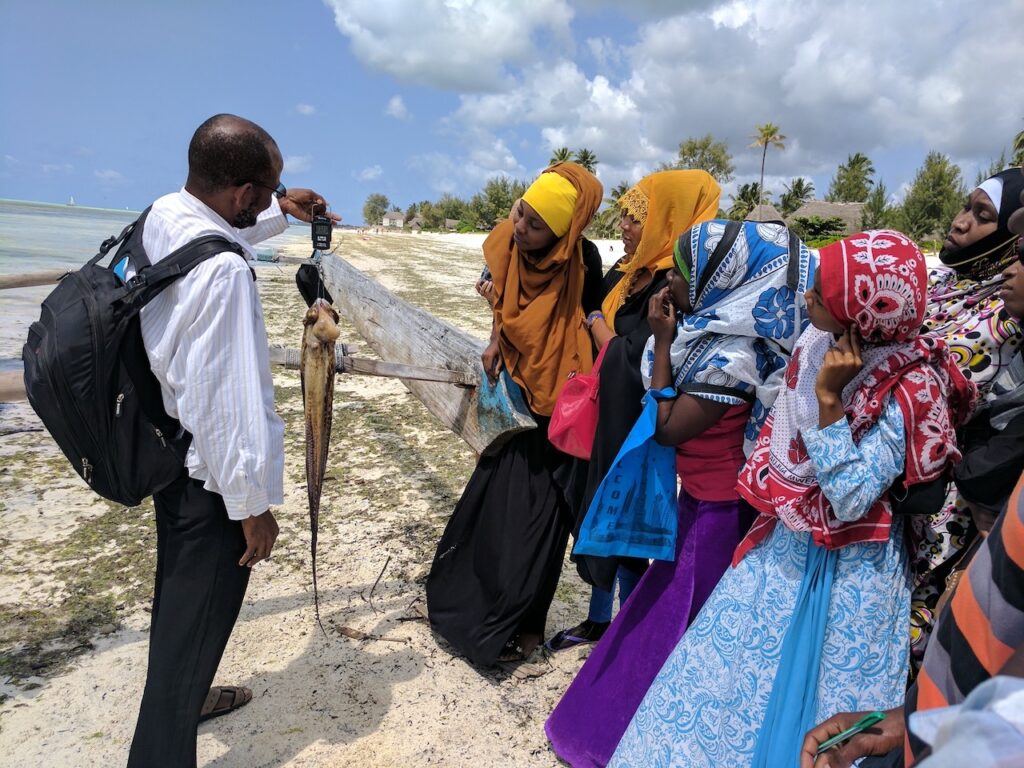
In the international NGO Blue Ventures, we have found a strong and experienced partner to put our work in Zanzibar on a new footing. Together, we are pursuing an approach that consistently links nature conservation with the realities of life in coastal communities. At the heart of this is the conviction that healthy marine ecosystems can only be preserved in the long term if local people are actively involved in their protection and use—and derive tangible benefits from them.
The “Community-Based Fisheries Management” (CBFM) project, which we will be implementing over a three-year period starting in 2026 in five communities on the east coast of Zanzibar, addresses precisely this issue. The goal is to empower these communities to sustainably manage their own coastal waters, rebuild fish stocks, and at the same time strengthen their economic and social resilience.
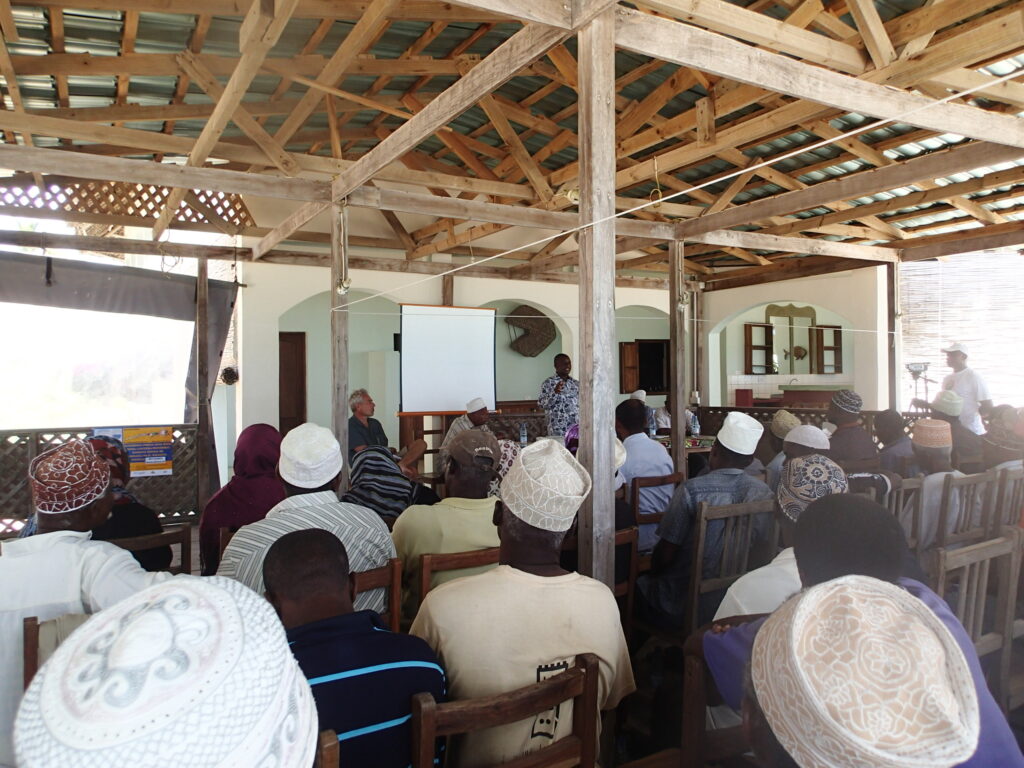
Our approach starts with the people: fishermen and fisherwomen, traders, processors, and their families are at the heart of all our efforts. Together with them, we establish local fisheries committees, which, as democratically legitimate bodies, take on responsibility for managing marine resources. These committees work closely with government agencies so that local rules are not only accepted but also officially recognized and enforceable in the long term.

An important first step is reaching a shared understanding of the current situation. That is why we conduct comprehensive assessments in collaboration with the communities: Where is fishing taking place? Which species are being caught? How are catch levels changing? Who is involved in the value chain? This data is not collected “from the outside,” but rather developed in collaboration with the users of these resources. This generates local knowledge that serves as the foundation for informed decisions while also raising awareness of changes in the ecosystem.
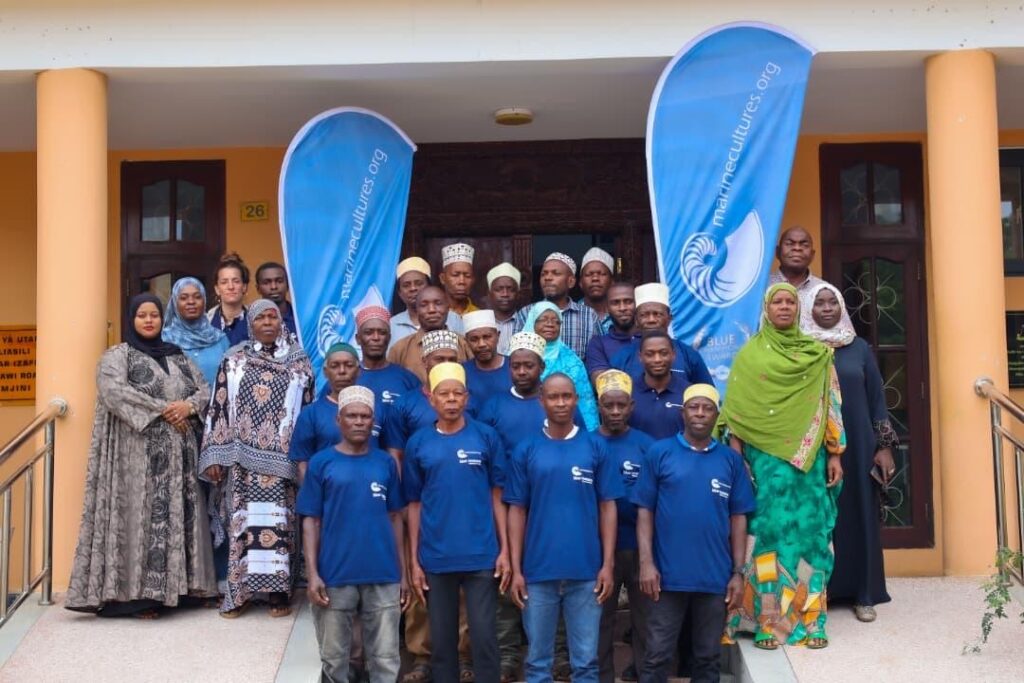
Building on this, we support local communities in a step-by-step process to develop and implement sustainable management rules. These include, for example, time-limited protected zones (so-called “temporary closures”), fishing restrictions, or the protection of particularly sensitive habitats such as coral reefs and seagrass beds. It is crucial that these rules are developed, supported, and enforced by the communities themselves. Only then can they be effective in the long term.
A central element of the project is the principle of “learning by doing.” Communities first test measures on a small scale, observe their effects, and then adjust them accordingly. This iterative approach makes it possible to develop local solutions that are both environmentally sound and socially acceptable. At the same time, these processes strengthen the communities’ ability to make decisions independently and take responsibility.
In addition to fisheries management itself, the project pursues other closely related goals. These include improving food security: Fish is a key source of protein for many households, and sustainable management helps ensure this supply in the long term. Equally important is the economic stability of households. Through complementary measures such as financial literacy programs or savings and credit groups, fishing families are supported in better managing their incomes and mitigating risks.
In the long term, the goal is for communities not only to better protect their resources but also to strengthen their rights. A clearly defined right to have a say in the use of their coastal waters is crucial to preventing external overuse and safeguarding local interests. In later phases of the project, the fisheries committees are therefore intended to become officially recognized management structures that independently manage their areas and network with other communities along the coast.
Our vision is for the five project communities to develop into strong, self-organized actors that demonstrate how sustainable fishing and marine conservation can work in practice. These experiences should not remain isolated but should serve as a model for other regions—in Zanzibar and beyond.
Through our partnership with Blue Ventures, we benefit from many years of international experience, proven methods, and flexible support. At the same time, the core of our work remains rooted in the local community: the solutions are developed within the communities themselves. In this way, we lay the foundation for coral reefs to recover, fish stocks to return, and local people to build a secure and sustainable future from the sea.
The goal of working with the public and government agencies to achieve sustainable fishing in coastal waters is nothing new for marinecultures.org. We have already made some progress:
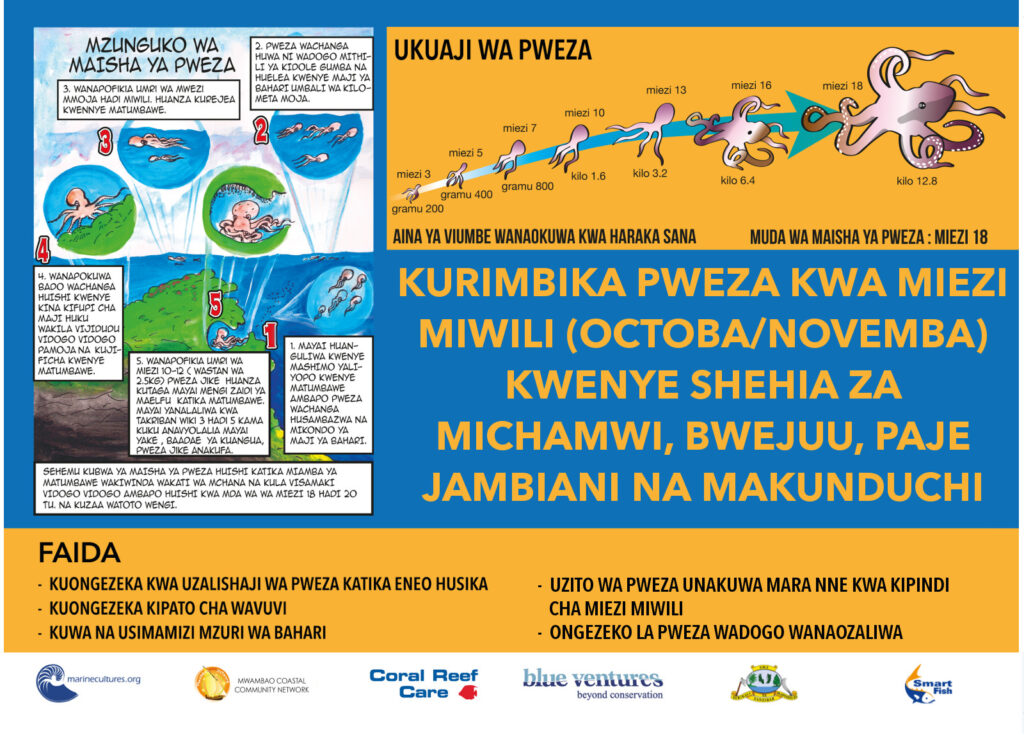
Establishing temporary closed seasons helps protect the local squid population. Closed seasons lead to significantly higher catch rates as early as the first year.
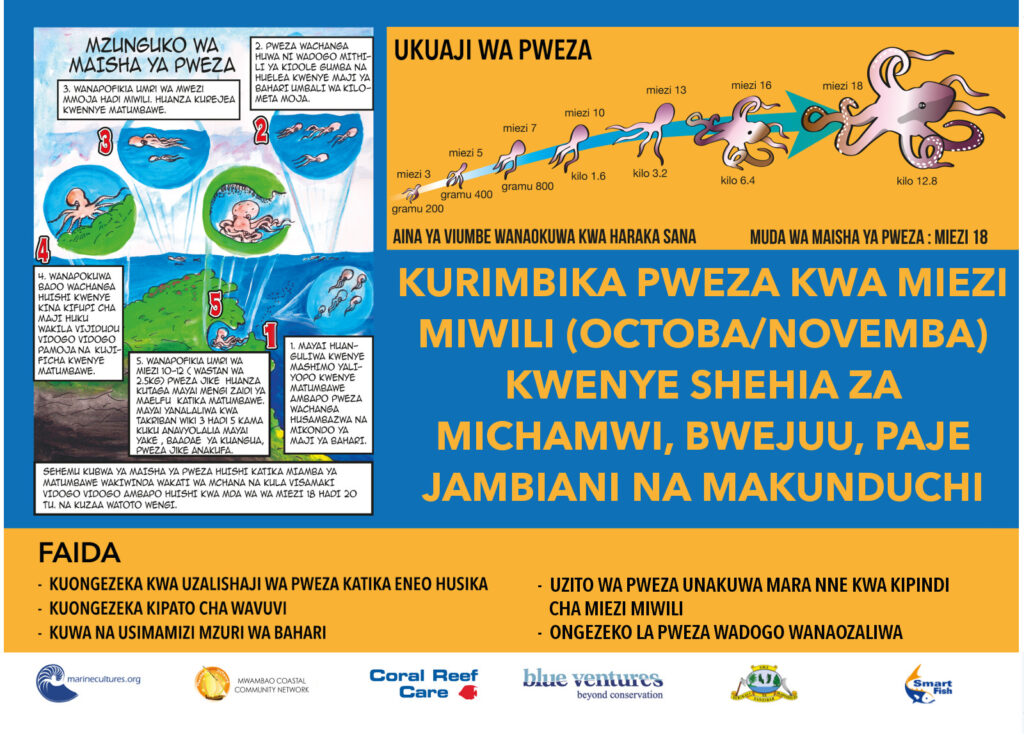
More than 65% of the reefs in the Indian Ocean are threatened as a result of heavy economic exploitation. Overfishing poses the greatest threat. Through the “Octopus Management” project, we worked with the British NGO Blue Ventures to convince the population along Zanzibar’s east coast that active conservation and responsible management of natural resources are more economically successful than overexploitation. The economic benefits of sustainable resource conservation can be demonstrated most quickly through octopus management, as it can nearly double catch yields as early as the first year.
Approach to a Solution
In fishing regions of developing countries, governments generally lack the capacity and financial resources to successfully implement conservation projects using a “top-down” approach (Purcell 2010). For this reason, we have decided to adopt a “bottom-up” approach and work with the local population to establish a conservation program.
Program
By implementing two temporary closed seasons each year, we aimed to protect the local octopus population in the long term while simultaneously promoting the sustainability of octopus fishing and increasing catch rates. The first closed season coincides with the phase in which octopuses double their weight every two months. We learned from our partner organization, Blue Ventures in Madagascar, what it takes to successfully manage octopus populations. Our partner, Mwambao, has also gained relevant experience on the neighboring island of Pemba. We were aware that we could not simply copy these models one-to-one when setting up a similar project in Zanzibar, but rather had to take the specific context into account.
We have advocated for the establishment of no-fishing zones in the lagoon to allow marine life to reproduce. Experience in existing protected areas shows that this allows populations to recover and yields to increase.
In the Philippines and many other places around the world, fishermen have been able to double their catch rates thanks to protected areas. In Zanzibar, too, fishing accounts for a large share of the subsistence economy and has been facing rapidly declining catch rates for some time. Furthermore, the fishermen do not have boats suitable for the open sea. As a result, fish and shellfish stocks in the lagoon are under excessive pressure. Some fishermen are now waking up to the situation and are more open to our ideas. The willingness to make a change is growing. We want to actively promote this and thereby catalyze locally driven marine conservation.
Background
In 2012, the government confiscated various nets with mesh sizes that were too small from the fishermen of Jambiani/Paje and even arrested a few of them. There was a great deal of uproar in the village. However, some of the fishermen realized that things could not continue as they had been and began discussing possible changes. We were present at one of these discussions and proposed the idea of a “no-fishing zone.” This would involve closing off half of the lagoon to fishing to allow fish and other animals to reproduce. Experience from existing no-fishing zones shows that these measures lead to increased catches in the other half of the lagoon.
Our input seems to have borne fruit: In mid-2013, fishermen approached us with a request to help them establish a “no-take zone.” Thanks to the long-standing efforts of marinecultures.org, the message has gotten through.
Action
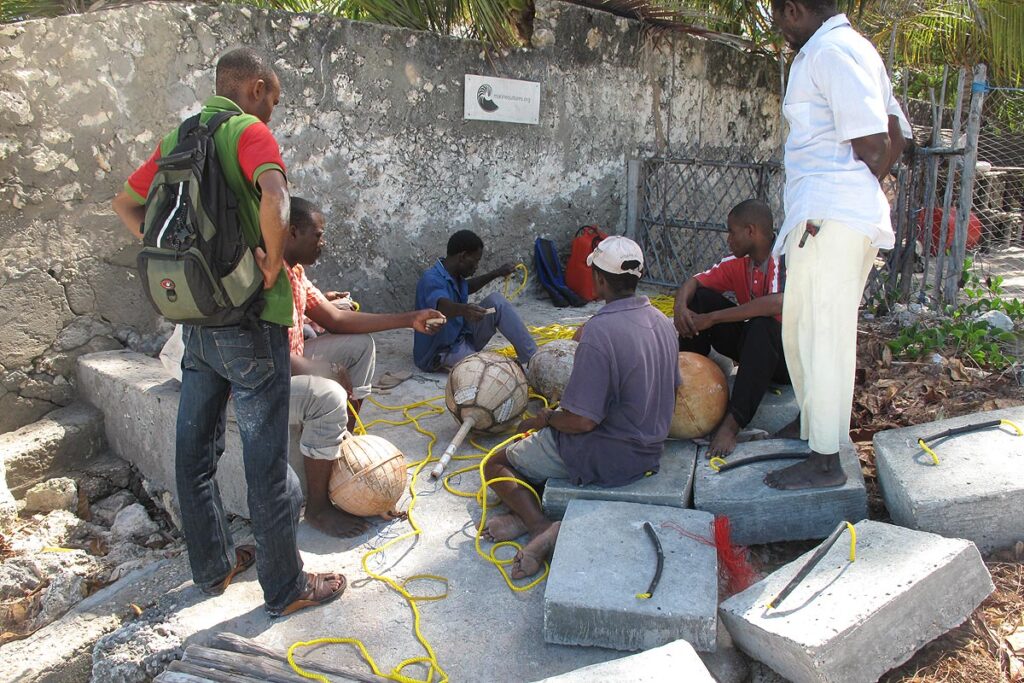
We are more than happy to support the fishermen’s initiative and stand by them with advice, practical help, and financial support. After lengthy debates, the first pilot protected area was marked with seven simple buoys in 2013. The “no-take zone” wasn’t large, but it was a step in the right direction. After just a few weeks, there were already significantly more fish in the protected zone. Unfortunately, however, all the marker buoys were gone after a year, and the fishermen had trouble getting their colleagues to respect the protected zone. But they have recognized the problems and now want to do better.
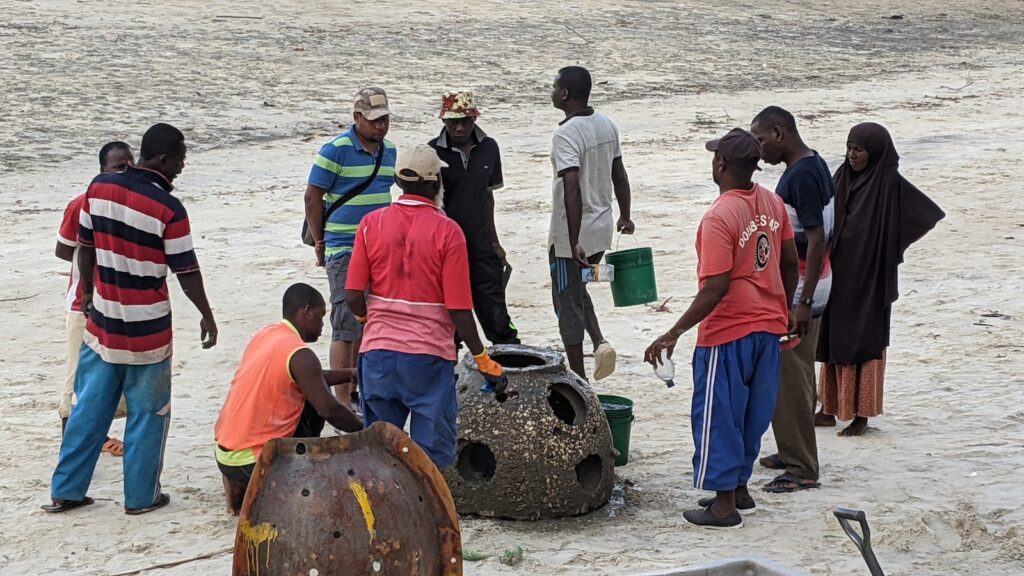
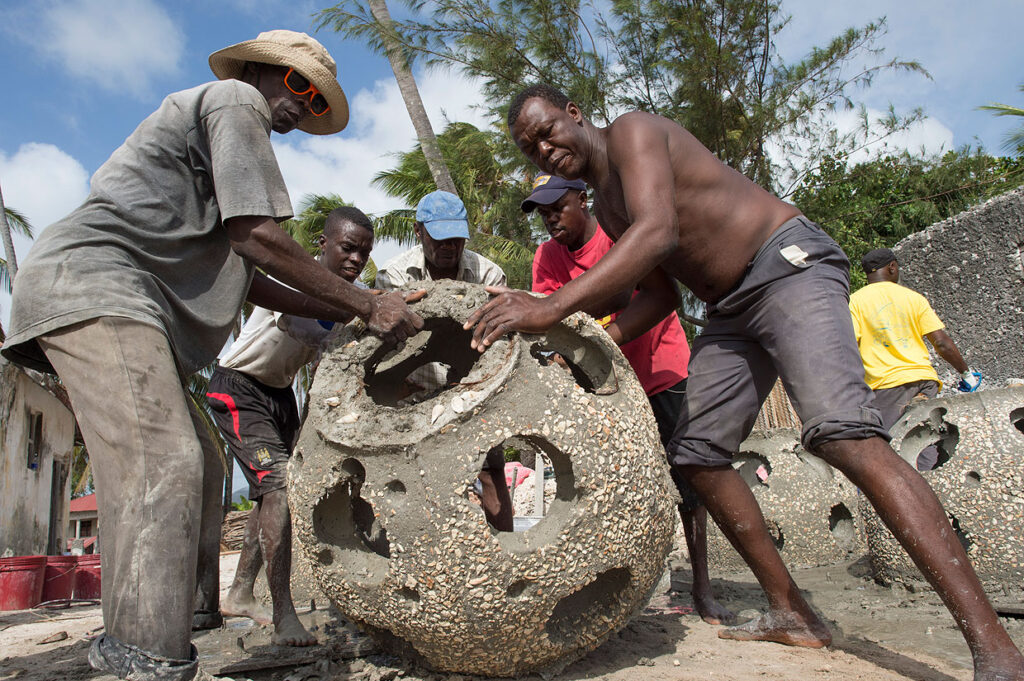
As part of the “Building Artificial Reefs” project, we established another small “no-take zone” in 2014 in northern Jambiani in collaboration with the Kibigija Fisheries Committee and the local NGO Mwambao. The problem here is that the fishermen from Kibigija are too slow compared to the net fishermen, who have outboard motors, to be able to chase them away at the right moment.
In 2015, we were able to bring coralreefcare.com on board as a partner for the establishment and management of protected areas, as well as for the critically important supporting measures. The following are necessary:
- Respect from all fishermen. They must recognize the purpose and economic benefits of these zones.
- A professional design for the “no-take zones” (size, spacing, layout, and marking).
- A local committee capable of ensuring sound, long-term management of the reserve.
Whenever it makes sense, we follow the recommendations of the MPA/No-Take Zone Instructions for the Reef Resilience Coral Reef Module ‘Resilient MPA Design’.
Through our activities and targeted awareness programs, we have raised awareness among the local population and government authorities about the importance of sustainable fisheries in the Indian Ocean.