
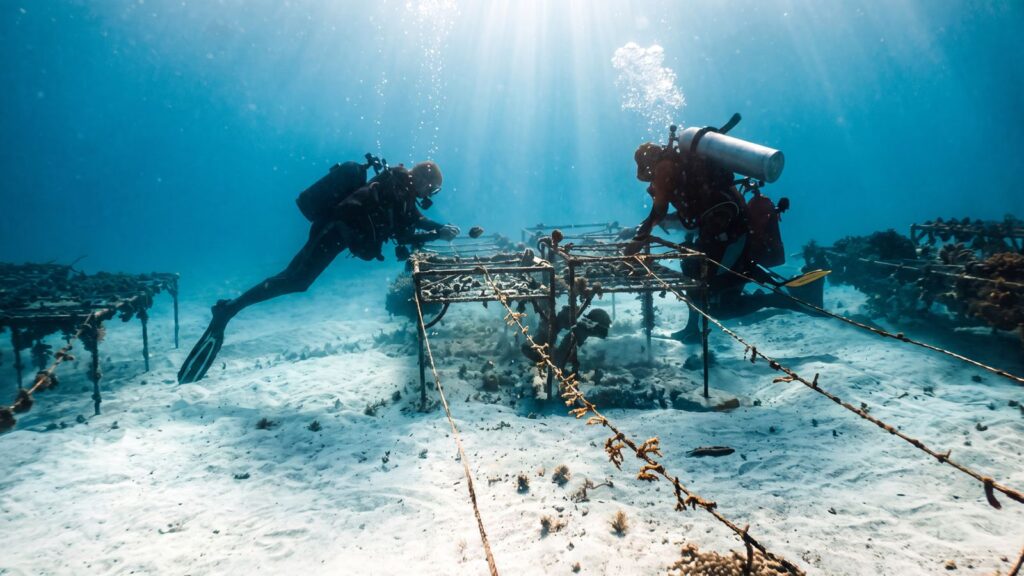
Throughout the year, our coral restoration team aims to grow approximately 10,000 coral fragments in our in-water nursery. The nursery consists of 40 coral tables located at a depth of around five metres in the Jambiani lagoon. Here, we collect and secure coral fragments, provide regular care and maintenance, and carefully clean the tables to prevent algae and other organisms from overgrowing the structures or competing with the corals for space.
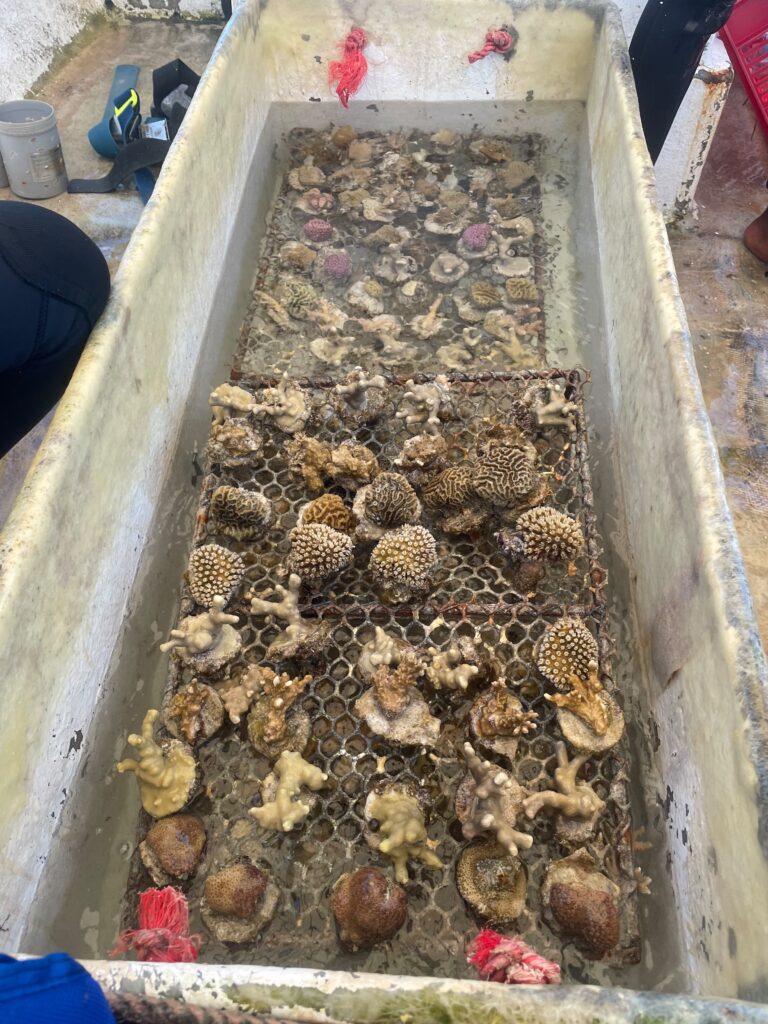
As the fragments grow, our team regularly checks their condition and development. Once they have reached a suitable size and are strong enough to withstand conditions on the reef, we outplant them onto selected reef sites. This approach, commonly known as coral gardening, allows us to grow a large number of corals before returning them to the natural reef environment. So far in 2026, our team has successfully outplanted more than 8,000 corals.
Preparing our nursery for El Niño
With forecasts indicating the possibility of a strong El Niño event, we are taking precautionary measures to protect as much of our coral stock as possible. One of our main concerns is the location of our current nursery. At approximately five metres, the nursery is situated in relatively shallow water, where corals can be particularly exposed to elevated sea temperatures and strong sunlight.
During El Niño events, changes in ocean circulation and weather patterns can contribute to prolonged periods of unusually warm sea temperatures. When corals experience excessive heat stress, they may expel the microscopic algae living in their tissues. These algae provide much of the corals’ energy and give them their characteristic colours. Their loss causes coral bleaching. If high temperatures persist, bleached corals can become weakened and eventually die.
Rather than waiting for the heat stress to affect our nursery, we have decided to take preventive action. We are clearing our existing nursery tables and outplanting the grown coral fragments directly onto deeper reef areas, targeting depths of approximately 10 to 15 metres.
Our reasoning is that deeper water may provide a more favourable thermal environment during periods of extreme heat. Depending on local conditions, deeper reef areas can experience lower temperature peaks and less exposure to intense sunlight than shallow reef areas. By relocating our nursery-grown corals, we hope to give them a better chance of surviving the upcoming heat stress. This is a precautionary measure rather than a guarantee, as deeper reefs can also be affected by marine heatwaves.
Moving our nursery deeper and protecting future donor corals
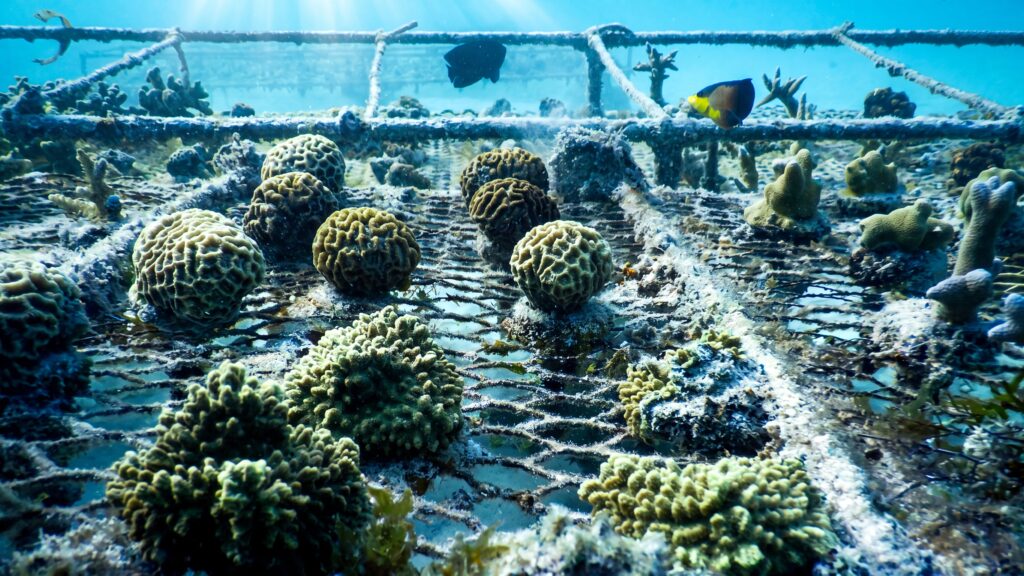
We are also planning to relocate some of our coral nursery tables to deeper locations. This will allow us to continue collecting and securing Corals of Opportunity (COOs) while reducing their exposure to the potentially extreme conditions in shallow water.
Corals of Opportunity are naturally detached coral fragments that are found lying loose on the reef, often following wave action, storms or other disturbances. If left unsecured, these fragments may be buried in sand, overturned or damaged by further movement. By collecting and securing suitable fragments on our nursery tables, we can give them an opportunity to recover, attach and grow.
Our aim is not only to protect these corals during the coming El Niño event, but also to maintain a healthy stock of future donor corals.
What are donor corals?
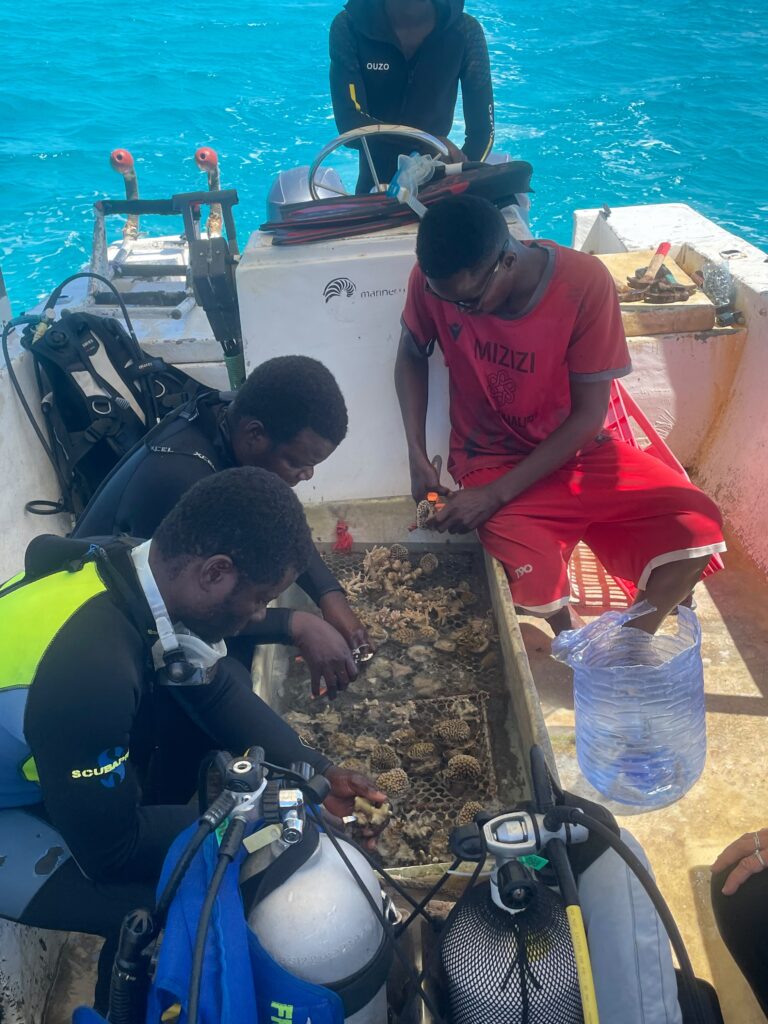
Donor corals are healthy, established coral colonies that serve as a source of material for future coral propagation. Once a coral fragment has grown into a sufficiently large and healthy colony, it can potentially provide new fragments for further nursery cultivation. These fragments can then be grown and eventually outplanted onto the reef, creating additional coral colonies.
In this way, donor corals become an important part of a sustainable restoration cycle. Instead of repeatedly collecting new material from natural reefs, we can gradually build up our own nursery stock and use it to produce further generations of corals. This helps increase our restoration capacity while reducing the need to remove fragments from healthy wild colonies.
By moving part of our nursery infrastructure into deeper water, we hope to safeguard valuable coral stock and maintain our ability to continue producing corals throughout and after the El Niño event.
We will report back
These measures represent an important adjustment to our restoration activities in response to changing environmental conditions. Our immediate priority is to protect as many corals as possible while maintaining the capacity to continue our restoration work.
We will monitor the relocated corals and nursery structures and report back on their condition and survival after the event, around May or June. We hope that these precautionary measures will help preserve valuable coral stock and allow us to continue our work towards restoring the reefs of Jambiani.