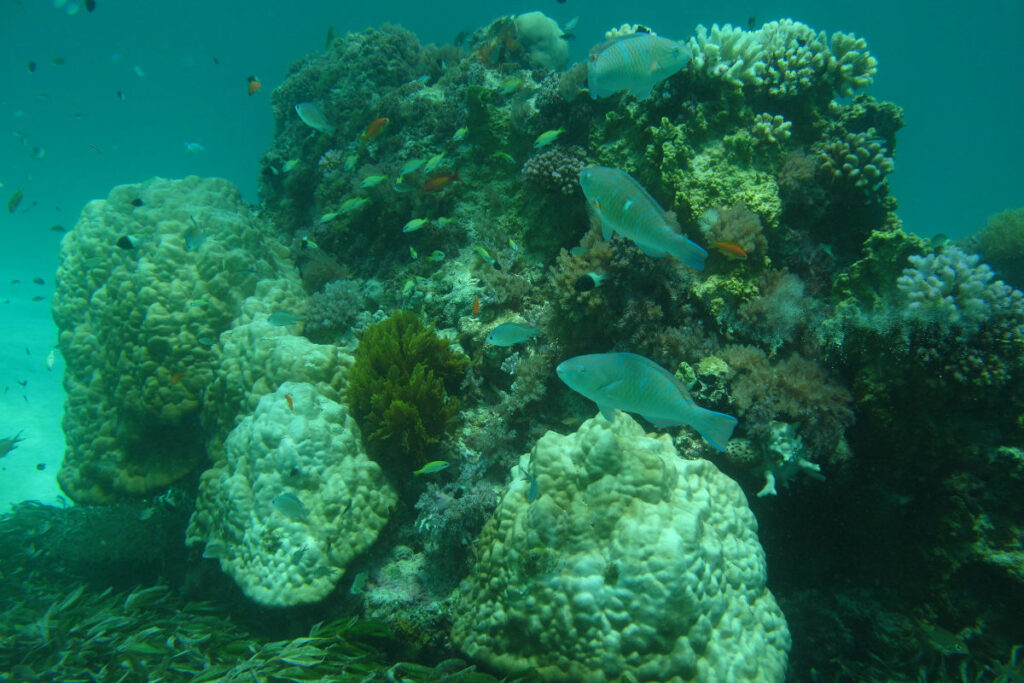
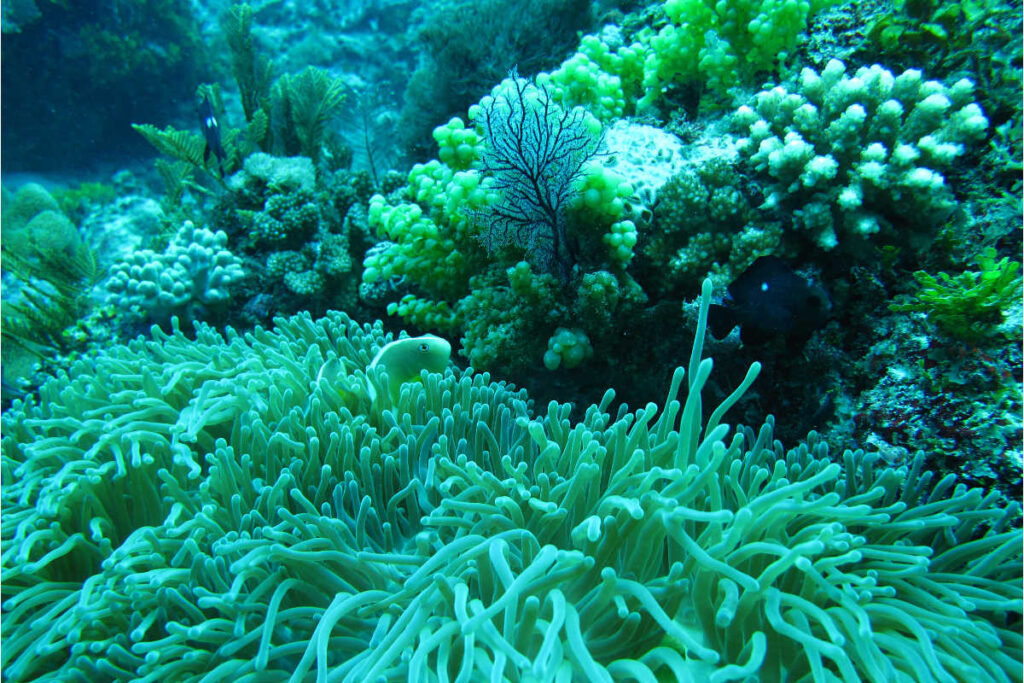
Healthy coral reefs are vital for both people and the environment. They provide an important source of food for marine life, generate income through fishing, and serve as a tourist attraction.
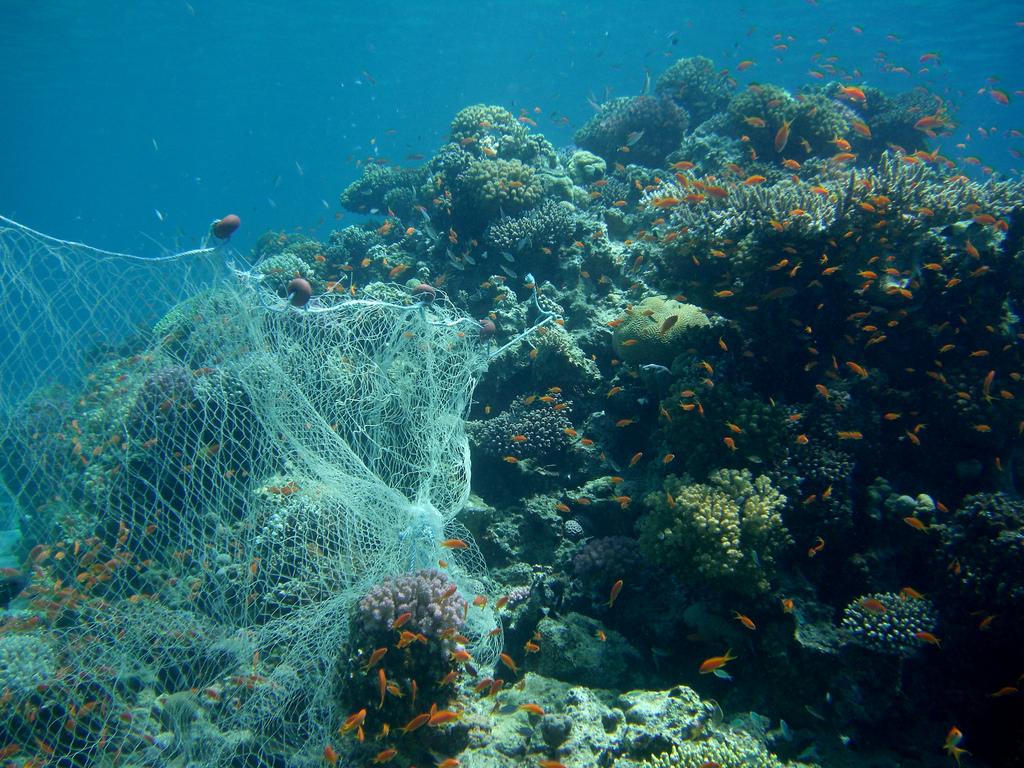
Coral reefs around the world are under increasing pressure. Zanzibar’s reefs are also under acute threat: from climate change and the associated rise in sea temperatures, as well as from overfishing, pollution, anchor damage, tourism and coastal development.
Together with various partners and the local community, we are implementing concrete measures to protect the coral reefs.
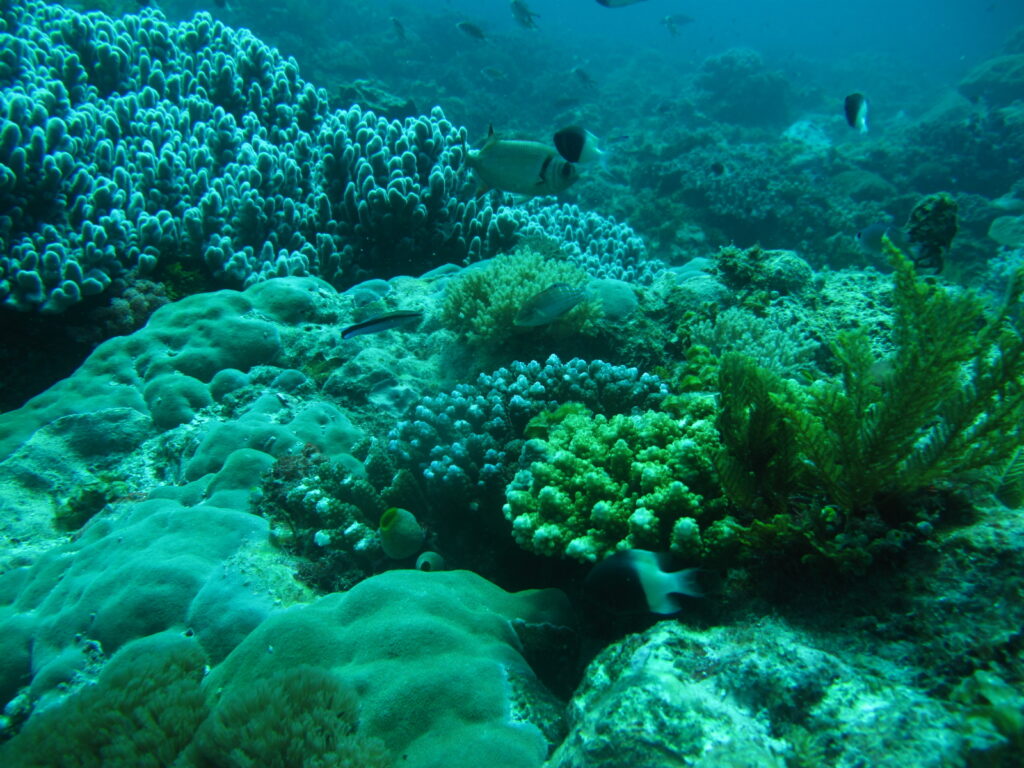
What we do
In the Jambiani Lagoon, we have established a coral farm where we cultivate corals, develop this technology locally, and train local farmers to work independently. Using corals that have proven resistant to high temperatures in the lagoon, we are restoring damaged reefs and educating the local community about the importance of reefs.
We place a high priority on genetic diversity. In 2026 we will launch a project for sexual coral reproduction—using a low-cost pop-up lab and simple in-situ systems for larval settlement.
To revitalize unstable reefs or sandy seabeds, we are installing artificial structures—Reef Stars—where marine animals can find shelter and habitat.
In 2014, we began setting up a coral farm in the Jambiani Lagoon—initially intended to breed resilient corals for the aquarium trade and as a sustainable alternative source of income to fishing. However, the El Niño events of 2016 and 2017 led to massive coral bleaching, resulting in the loss of more than 50% of the nearshore populations and the repeated destruction of our coral farm. These experiences clearly demonstrated how vulnerable previous approaches were to rising water temperatures. In response, we gradually transitioned the commercial breeding operation into a coral restoration program.
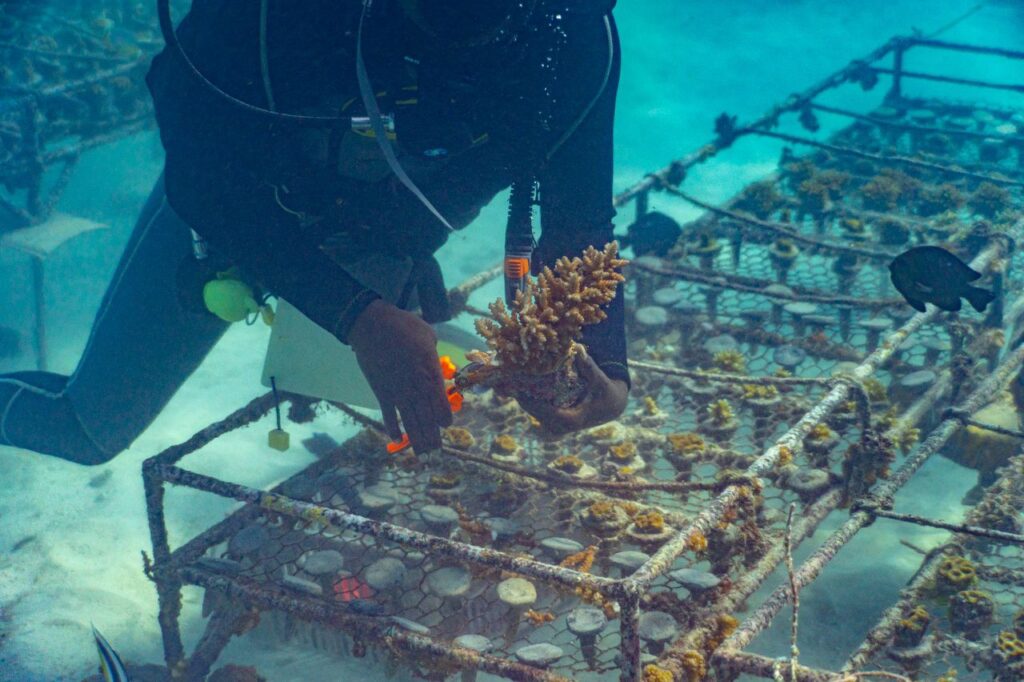
Since then, we have focused on cultivating corals that have proven to be more heat-tolerant. At the same time, we place great emphasis on genetic diversity to increase the resilience of the populations—see “Preserving Genetic Diversity” and “Sexual Reproduction.”
Our house reef, which had been severely damaged, was our first “patient.” An artificial reef based on Reef Balls served as another test site. Whenever possible, we select and cultivate genotypes that have proven to be more resistant to higher temperatures, while ensuring the greatest possible genetic diversity. We largely follow the Restoration Guidelines of the Coral Restoration Consortium (CRC), particularly Baums et al. 2019.
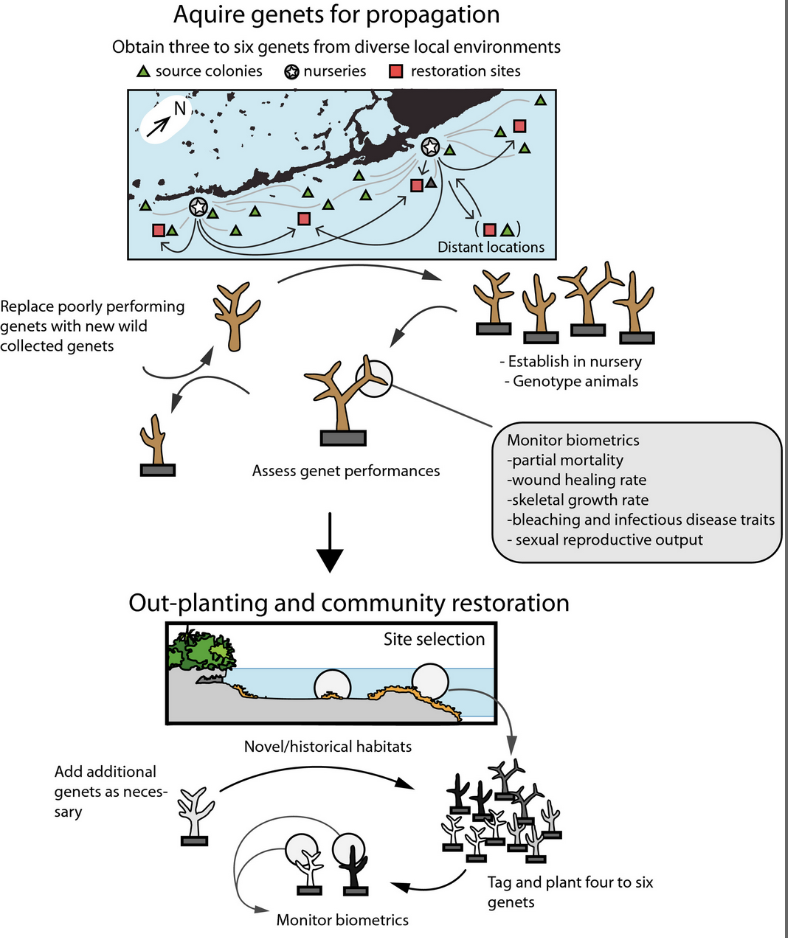
We are gradually expanding our activities to become a centre of excellence for coral reef restoration in the Western Indian Ocean (WIO) region.
In a restoration project in the Philippines, all 15,000 corals that had been planted died when seawater temperatures rose. Normally, a few corals always survive such disasters—those that are already somewhat better adapted and have the right DNA. But in this case, they were all clones that came from the same parent colony. A disaster. Without genetic diversity, there is no survival!
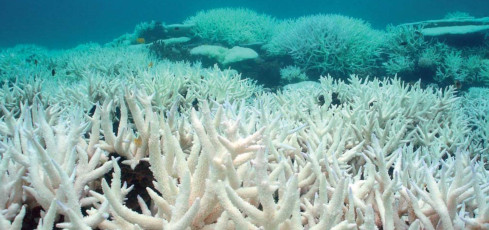
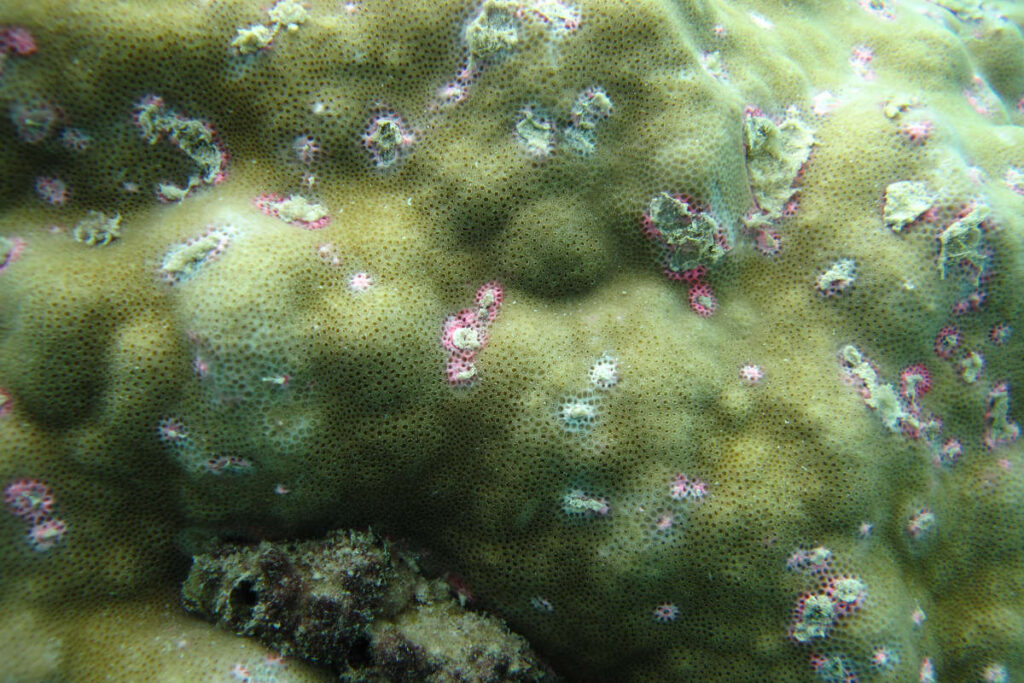
Coral bleaching caused by excessively high water temperatures.
To maintain a high level of genetic diversity, we decided, together with our partner at the time, Coral Reef Care, to take a new approach.
We collect exclusively what are known as “Corals of Opportunity.” These are fragments or corals growing on loose rocks where they have no room to grow. Even small pieces are sufficient. The important thing is that if two pieces belong to the same species, to make sure that they have different genotypes—for example, because they were found 100 meters apart, or because they belong to a massive or encrusting species, which rarely produces natural clones in the way branching corals do. With branching corals, pieces break off from time to time and are carried away by the current. We record the location of every “Coral of Opportunity” we find so that we know exactly where a coral originally came from and can avoid returning to the same location twice.
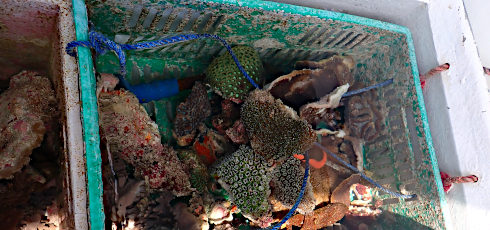
Corals of Opportunity on their way to the farm.
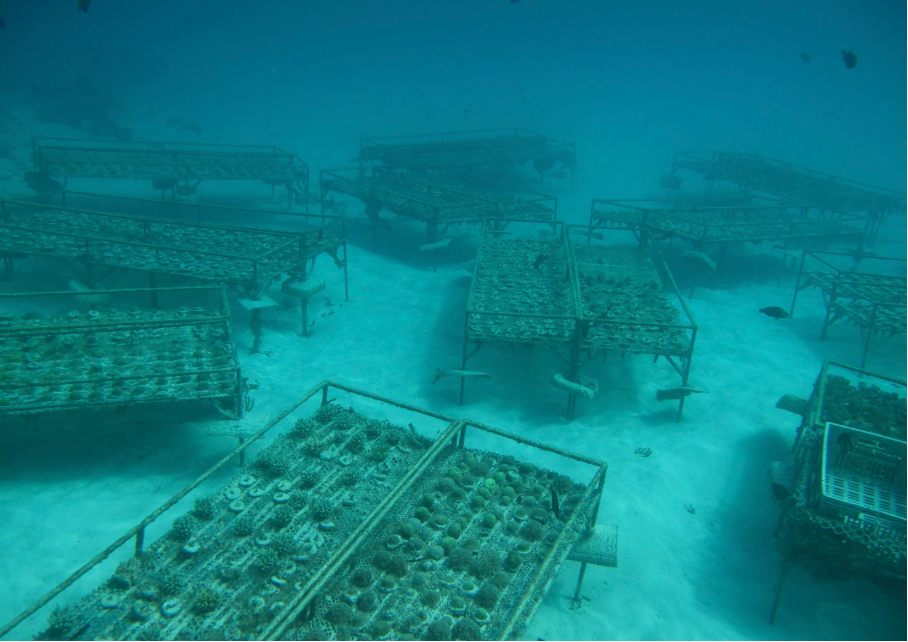
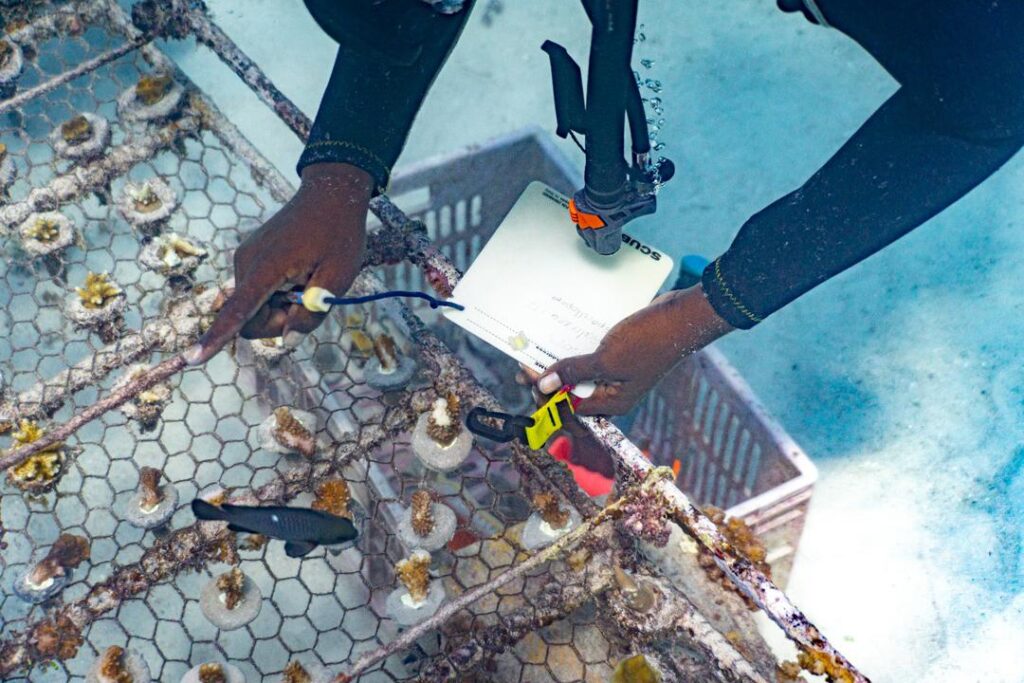
We divide all collected coral pieces into a maximum of 20–25 small fragments per species and genotype. We attach these to a small cement tile in a separately labelled sector of the coral table using a small amount of epoxy glue. This way, we know exactly that, for example, the greenish Montipora we found at location XY is on table D in sector 3. Although the 20–25 new “baby corals” all share the same genotype—and are essentially just clones—we prevent multiple clones from being planted out at the same location or on the same reef by carefully controlling their distribution during transplantation.
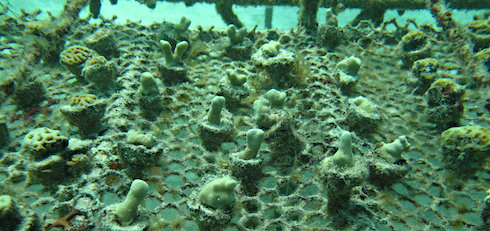
A sector with 20 Montipora.
Now the actual coral farming begins. This involves nurturing and caring for the tiny baby corals until they are large enough to be transplanted onto damaged or dead reef structures. Depending on the species and growth rate, this takes about 25–40 weeks.
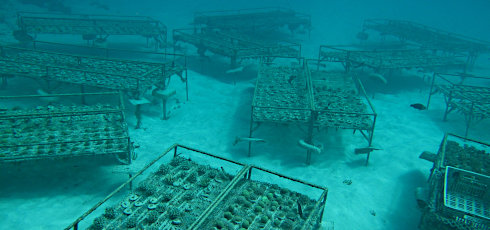
We currently have 40 of these tables.
When transplanting, we never use all 20–25 specimens on the same reef; instead, we always use only 4–5, which we place in a cluster (close together). Since they have identical genetic material, they fuse together readily. And even if 1–2 of the specimens die, some will still survive. The reef comes back to life, and our work has been worth it.
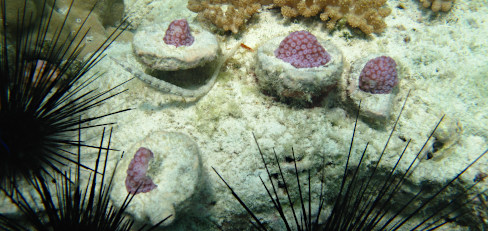
A cluster of (probably) Astreopora.
Furthermore, unlike many organizations that focus on just a few species, we strive to cultivate as many different types of coral as possible. In this way, we not only preserve biodiversity during restoration efforts, but we also actively promote it.
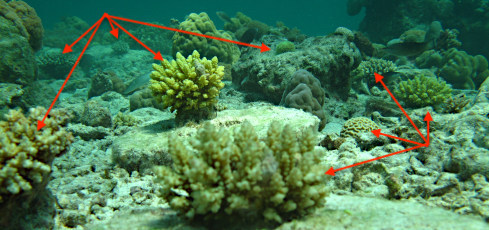
Transplants after two years on our house reef.
We currently transplant about 8,000–10,000 corals per year. Keep your fingers crossed for us, support us financially, and reduce your CO₂ emissions as much as possible so that water temperatures don’t rise any further and undermine our efforts!
To increase genetic diversity and gain further scientific insights, we are working on sexual coral reproduction—using a low-cost pop-up lab and simple in-situ systems for larval settlement.
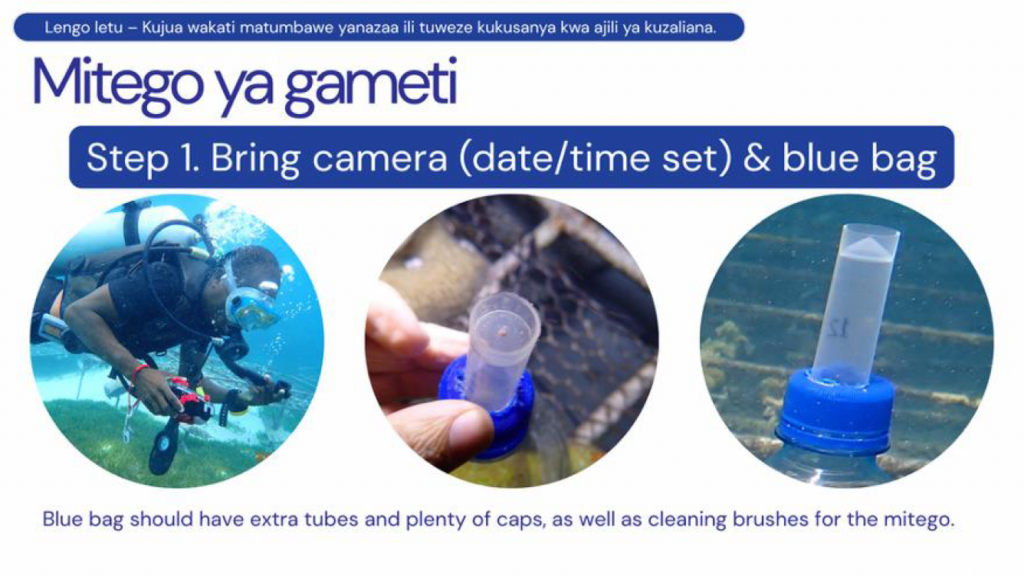
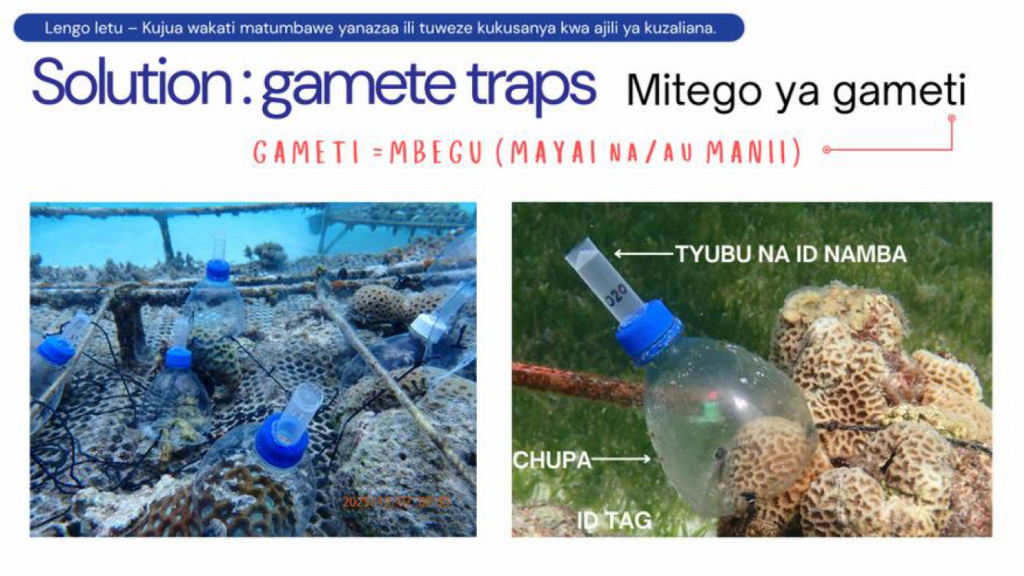
Since 2024, we have been collecting gametes during targeted night dives at spawning events and compiling a regional spawning calendar. In a second step, we will fertilize the collected gametes in the lab and raise the larvae until they are ready for transplantation. In this way, we will produce genetically diverse, resilient coral propagules for the restoration of degraded reefs. If the method proves successful, we will conduct systematic monitoring and train local staff to become instructors so that the method can be disseminated throughout the WIO region.
At mass spawning events, we collect gametes on targeted night dives; eggs and sperm from several parent colonies are combined to maximize genetic diversity. Fertilization then takes place under controlled conditions in a pop-up laboratory. The gametes are mixed with filtered seawater, embryo development is monitored under a microscope, and excess sperm and impurities are removed. Fertilized embryos remain in specialized larval culture tanks under controlled temperature and light conditions until the larvae reach the settlement stage.
We then transfer the larvae to prepared substrates (coral rubble or specially prepared surfaces). Once they have attached and stabilized, the juvenile corals continue to grow. As soon as they are robust enough, they are transplanted to suitable reef sites. Regular monitoring is conducted to track the survival and integration of the transplanted corals.
Since young corals in the wild have high mortality rates and traditional laboratory cultivation is costly in many regions, we are simultaneously developing and testing a simple, robust in-situ system for the settlement and cultivation of juvenile corals. The goal of this system is to improve survival rates and growth and to make the method feasible in the field.
marinecultures.org is scientifically supported by Dr. Ashlee Lillis of Sound Ocean Science
The project combines research, field testing, and knowledge transfer to build robust coral populations over the long term.
Reef Stars are modular structures that serve as a substrate for young corals to colonize. They provide stable attachment sites, especially for branching coral species, and immediately create local habitat complexity that would otherwise be lacking. Due to the higher material requirements and costs, Reef Stars remain a supplementary method for us. However, they are an excellent option for reef restoration when there are no natural rock structures on the seafloor (only sand, gravel, or soft sediments).
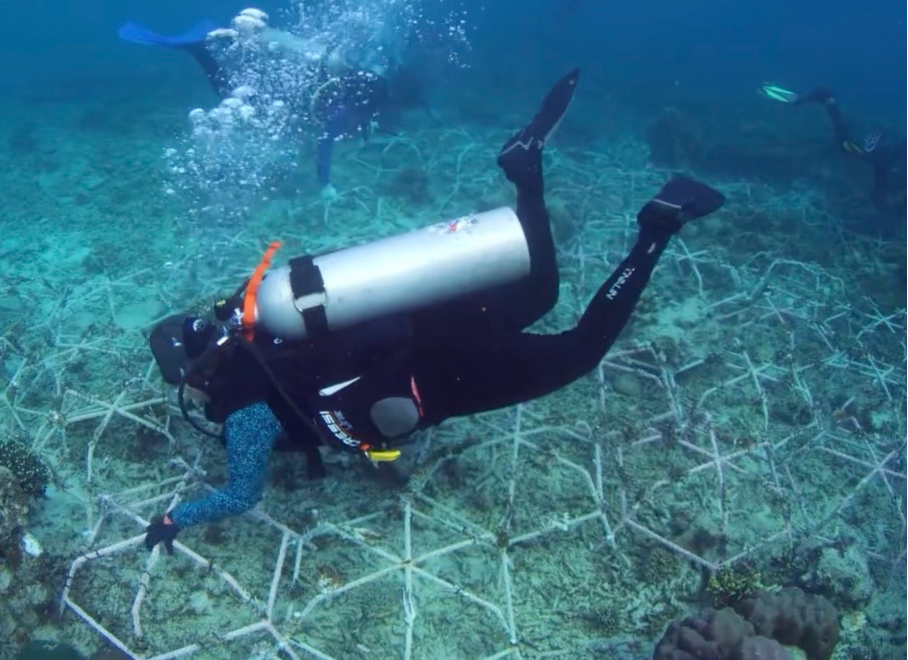
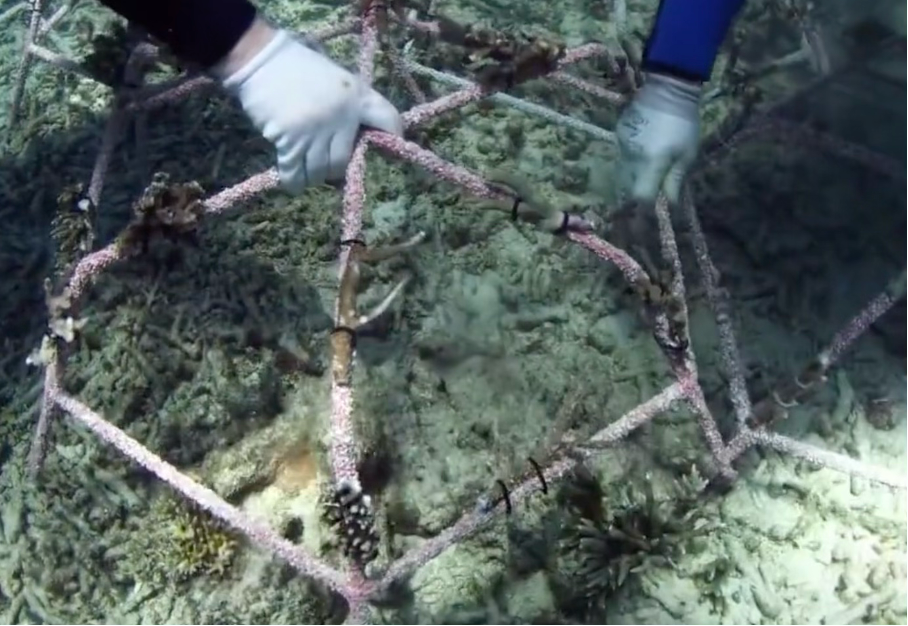
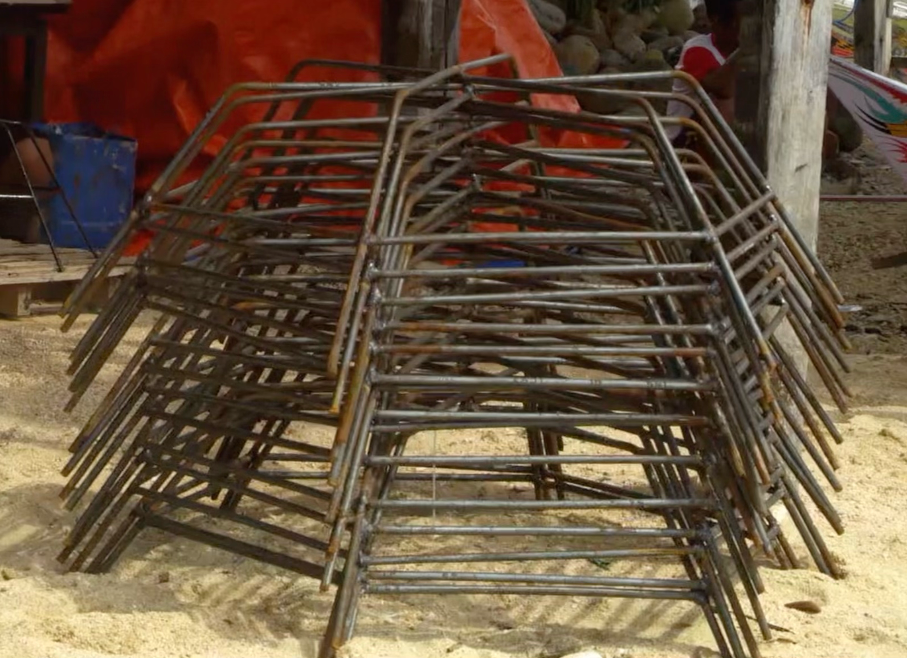
The stars are made of sturdy, coated rebar that we anchor into the sandy seabed. We strategically attach fragments of Acropora coral; branching species benefit particularly from the three-dimensional structure. A detailed technical description and design principles can be found at MARS Coral Reef Restoration.
“We’re helping the reefs recover”
Okala, former project manager and coral farmer at marinecultures.org:
“The environment here has changed. There are fewer and fewer octopus, fish, shellfish, and corals. Many plants and marine animals are suffering from high temperatures and climate change. Not too long ago, the lagoon was a healthy habitat for fish, but when the corals die, nothing lives there anymore.
We’re trying to restore the coral reefs, which is a huge undertaking. At our coral farm, we cultivate stony corals using various techniques. We focus on restoration and help the reefs recover. We replace corals on reefs that have been destroyed by climate change and unsustainable fishing practices.”
“The lagoon used to be rich with life”
Okala, former coral farmer and project manager with marinecultures.org, talks about the changes on the Zanzibar coast and about his work with the coral and sponge farms.
“When I was around 10 years old, I started to play in the sea, down on the beach. My father was a fisherman, so was his father before him. He just took me out to the reef where he used to catch octopus, collected sea cucumbers and other kinds of sea animals. So, this is how I learned from him to fish or to catch. But things have changed. The marine life we had before is totally different now.
Look at the situation of the lagoon. Before, life was good because they caught enough. Now there are less and less fish in the lagoon. The traps are often empty. That’s why I am working in this project now.
Fishermen have to go farther outside of the lagoon. Outside the reef, it’s a little bit easier to find fish. Sometimes they even catch huge fish like Gupa and others. As you can see, today the sea is calm and you can go out. On other days, the Indian Ocean out there can be very rough. No one can go out on the water. Even in this season, their small boats sometimes struggle outside the reef.
The Dema fish trap, a typical Zanzibar trap built with palm leaves and wood, is one of the important pieces of fishing gear. If the catch is good, he gets enough income and can even sometimes try for octopus or other species. As a trap fisher he is depending on his Dema.
The environmental situation here has changed. There is less and less octopus, fish, shellfish, corals and other important species. A lot of plant life and sea animals are already dead; others are suffering because of high temperatures and climate change. It seems like the only thing we can do is wait as they die. Many parts of the lagoon that used to be rich with life, like the deeper lagoon channel, have problems nowadays. Not that long ago, it was a very healthy habitat for fish, but once the corals were gone, nothing lives there anymore.
These environmental changes are an ongoing problem for us in Zanzibar. Over time, the corals are being bleached; they are dying and the fish are disappearing. Additionally, overfishing of the ocean creates an imbalance in the marine ecosystem. The loss of biodiversity damages the food chain; it has a catastrophic impact on coastal economies. When sea life is poor, the people who depend on it are impoverished as well.
I hope we realize soon all the effects of climate change are a result of human activities. That’s why we should change our behaviour in order to protect the environment.
Another challenge of the coastal area is the waste on the beaches and in the water. Local people, and even hotels, dump trash there. Every morning, you can find rubbish on the beach, and this affects the marine animals. And it affects the people who use the sea for seaweed farming or collecting food.
Our beaches are also littered with plastic that has travelled here from places far away. Globally, there are more than 9 billion tons of plastics circulating and only a small part of the material gets recycled. Nobody knows how much of plastic waste ends up in the oceans where it’s estimated to last for hundreds of years. Plastic material affects nearly 700 marine species and kills millions of animals every year when they ingest or get tangled in it.
Now we are trying to reforest the coral reefs, which is a big task. Last year, some of our young corals were affected by high water temperatures. We had planned to sell farmed corals internationally for use in aquariums, but we had to give up because of the climate change and too high water temperatures. Now, we are focused on reforestation. We help the reefs to recover. We replace the corals in areas, which have been destroyed by climate change and unsustainable fishing practices.
In our coral farm, we cultivate soft and hard corals using different techniques. We pin the soft corals onto thin sticks. We glue the hard corals directly on small discs. Another important task is cleaning the coral tables, using tools or just our hands to remove all the build-up of excrement or seaweed, which can limit growth over time.
Another task I have is to teach the sponge farmers. We train new farmers to cultivate sea sponges in a truly sustainable way. I teach them how to farm sea sponges without harming the environment or affecting the natural species in a negative way. My goal is also to help these women by giving them a skill, which they can use to create a better future for themselves and their families.
I am here to bring awareness to my community, and to my family. The available resources are not all for us, we are responsible for our future generations. We have to make sure that we are going to give our children enough resources. We have to let them know that they are not the owners and that we all together are responsible for the environment until the end of the world.”
The story of Okala comes from the documentary “Bahari Salama“.
>> Okala in the Dokumentary “Bahari Salama”
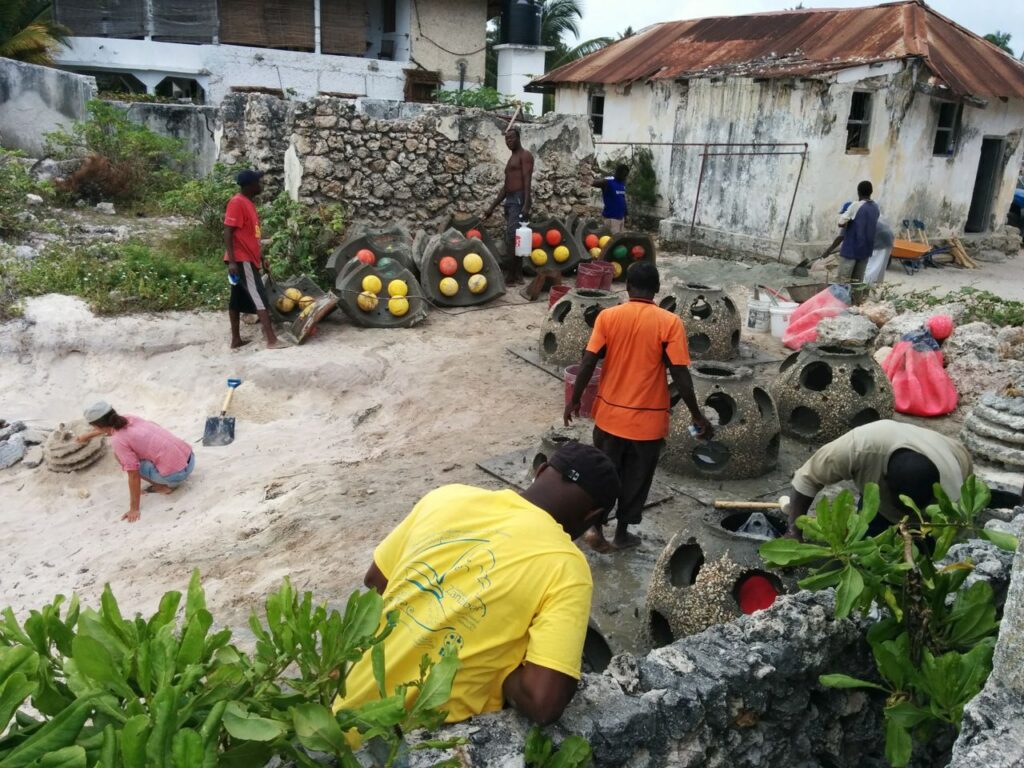
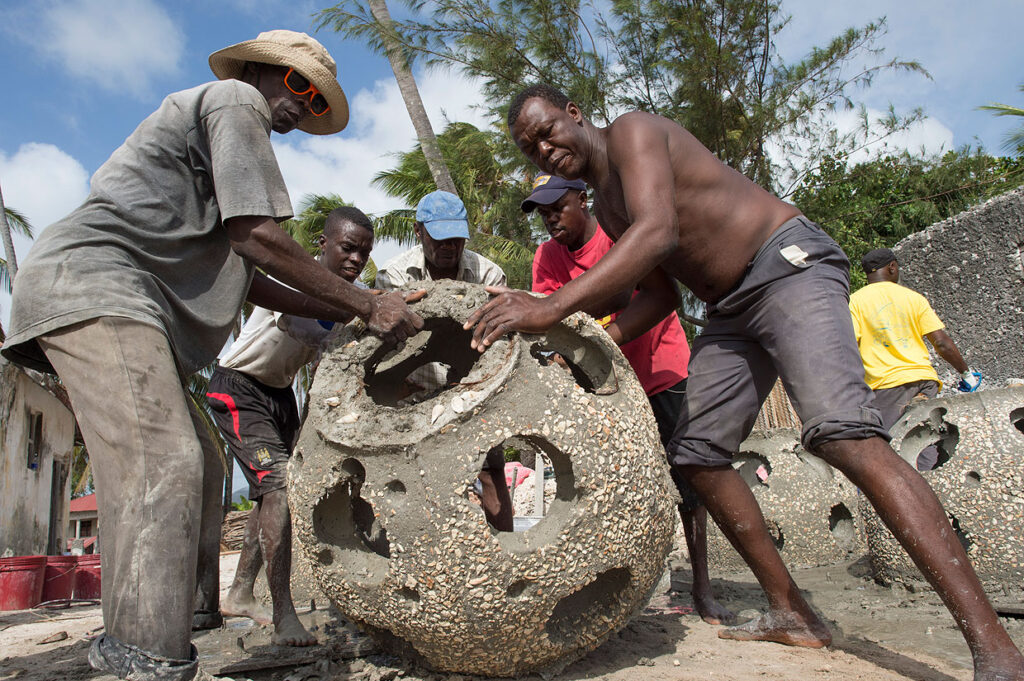
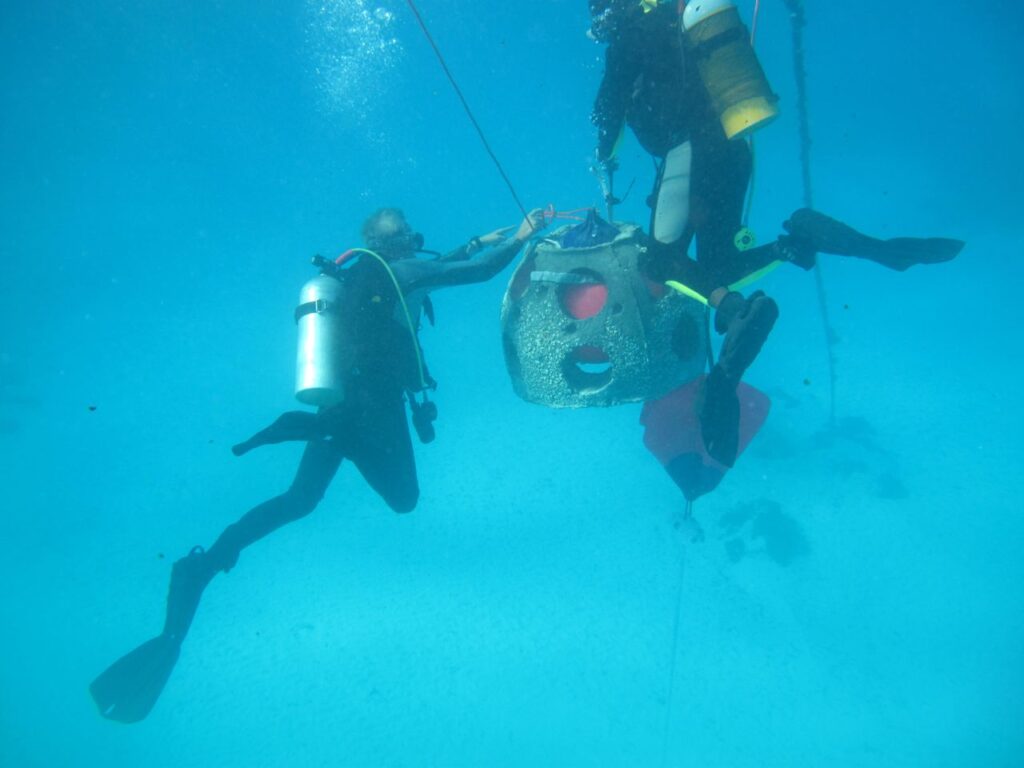
Between 2014 and 2024 we built and “reef balls” together with our project partners Mwambao and Coral Reef Care and thereby created habitat for the reintroduction of marine life and corals.
In 2014, we were approached by the Zanzibari NGO Mwambao Coastal Community Network to collaborate on the Reef Ball project. Thanks to our base in Jambiani, our team, and our coral breeding project, we became project partners and took over on-site project management.
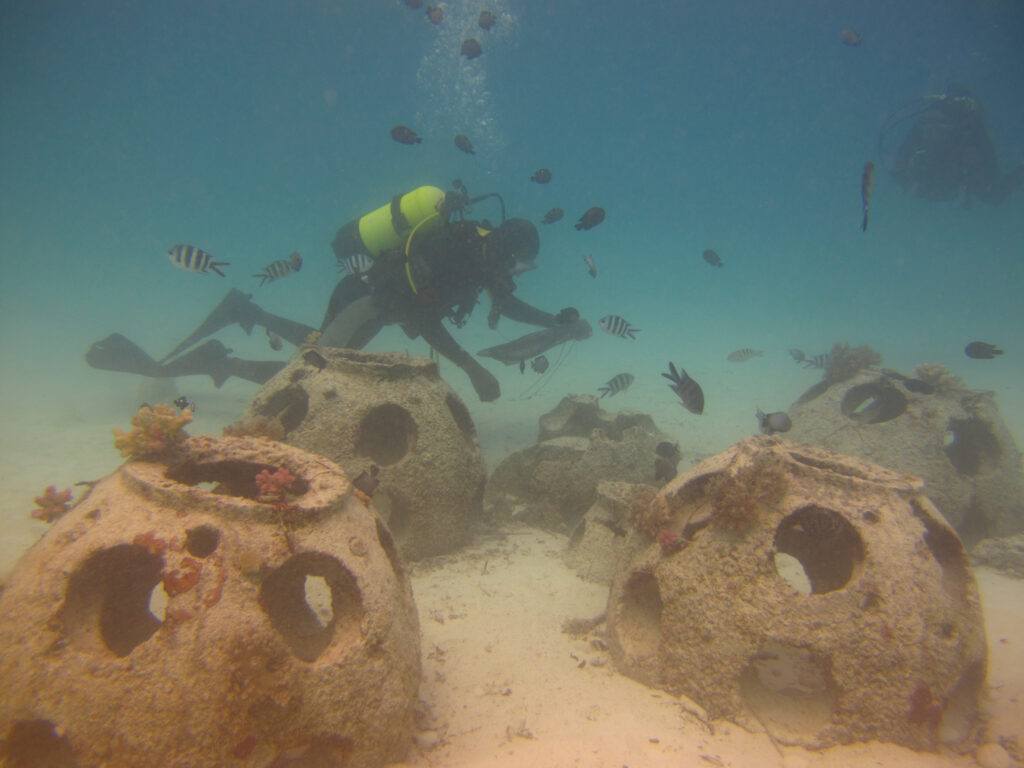
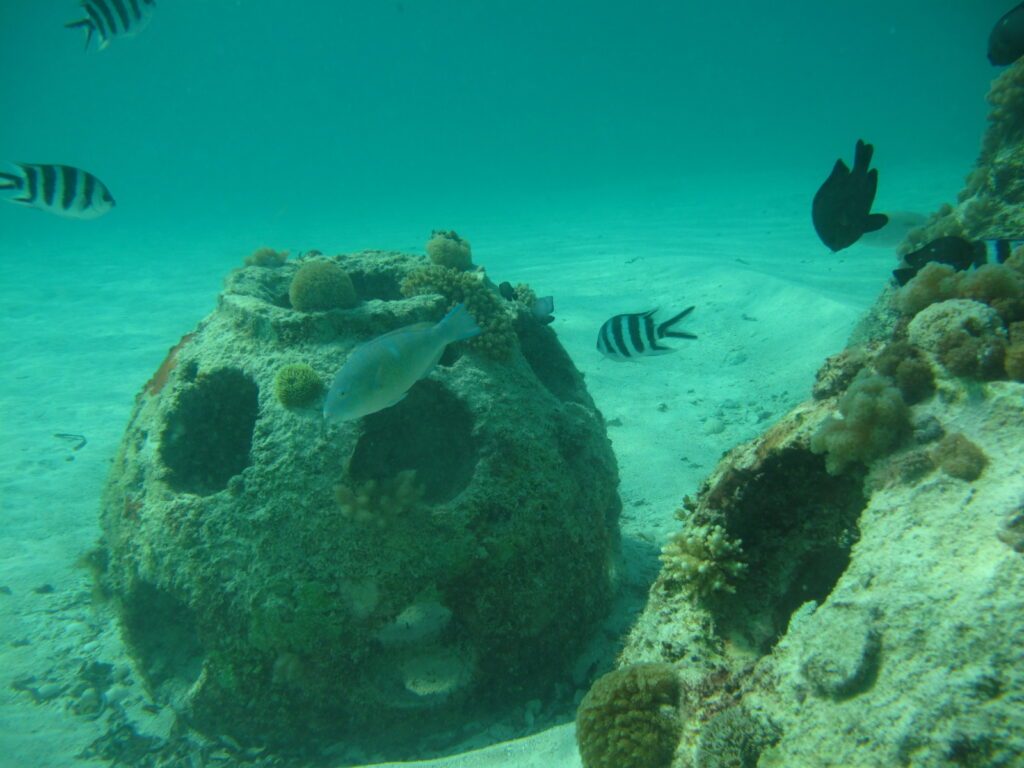
“Reef balls” are hollow, perforated concrete hemispheres used to revitalize dead reefs or transform a sandy, lifeless seabed into an artificial coral reef. More than 500,000 reef balls have already been deployed in over 55 countries worldwide (see www.reefball.org).
Algae begin to colonize the concrete hemispheres just one week after the reef balls are submerged. Shortly thereafter, the first animals—such as snails, worms, and various larvae—can be spotted on them. Crabs and lobsters seek shelter in the artificial cavities. Fish use them for cover and find good spawning grounds, while corals colonize the surface. Colonization occurs most rapidly when pre-cultivated corals are attached to the reef balls beforehand. They grow firmly onto them and spread out.
At popular dive sites, we have installed mooring buoys so that boat captains can tie their boats to the buoys instead of damaging the coral when dropping anchor.
Boat anchors carelessly dropped into the water repeatedly cause extensive damage to coral, especially at heavily used diving and snorkelling sites. With the rise in tourism, the coral reefs of Zanzibar are coming under even greater pressure. One would assume that dive operators and the relevant government agencies would have an interest in adequately protecting the coral reefs, which are vital to them and tourism in general. However, many dive operators say that anchor buoys and their maintenance are too expensive for them. Not even the already established marine protected areas (MPAs) are marked with buoys to make them visible to fishers. But criticizing the inaction of others does nothing to help the coral reefs. We have to take action ourselves.
Our concept is simple: Permanent anchor buoys are installed at the most popular diving and snorkelling spots. Instead of dropping anchor, boat captains can secure their boats to the buoys, thereby preventing damage to the coral. The buoys are secured to the seabed using the Halas anchoring system. This involves drilling a hole approximately 60 cm deep into the rocky seabed underwater with a hydraulic drill and then embedding a stainless steel rod in concrete.
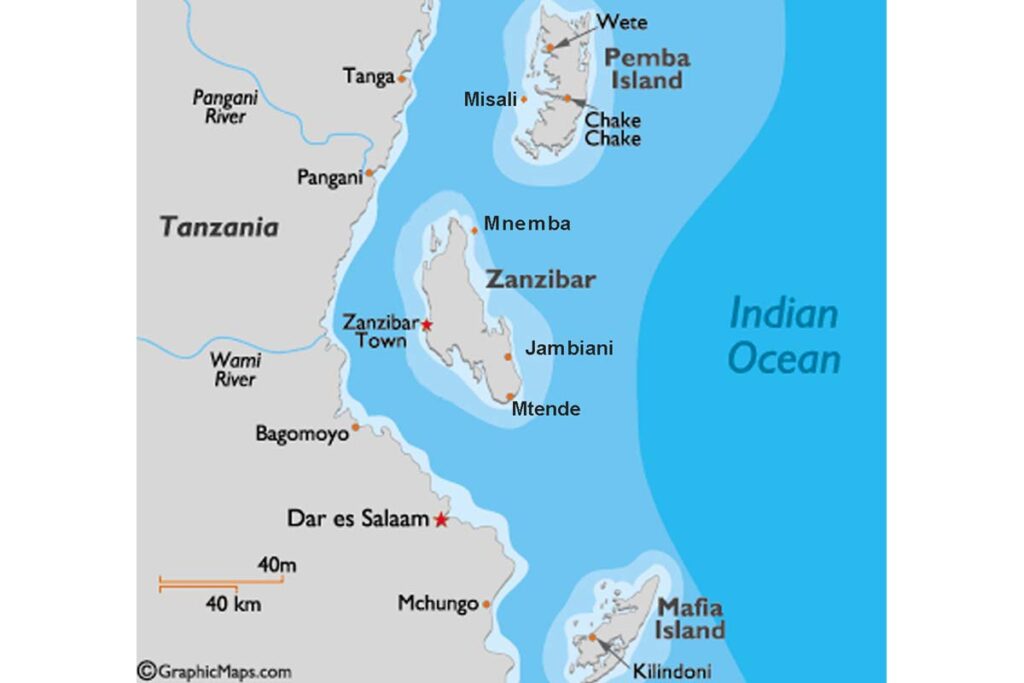
Based on the positive results from a pilot phase, we deployed a total of 40 anchor buoys at various key diving and snorkelling sites near the islands of Unguja, Pemba, Mnemba, Kwale, and Mafia. This also includes marker buoys for the marine protected areas of Mnemba Island, Chole Bay, and Tutia Reef on the island of Mafia.