

A Major Step for marinecultures.org
With the launch of our Co-Fisheries Management Programme, marinecultures.org is entering a new three-year phase. Together with coastal communities, we will work in six villages along the east coast of Zanzibar (Bwejuu, Kigaeni, Kibigija, Kajengwa, Kikadini and Paje) to explore how fisheries can be managed sustainably in the long term.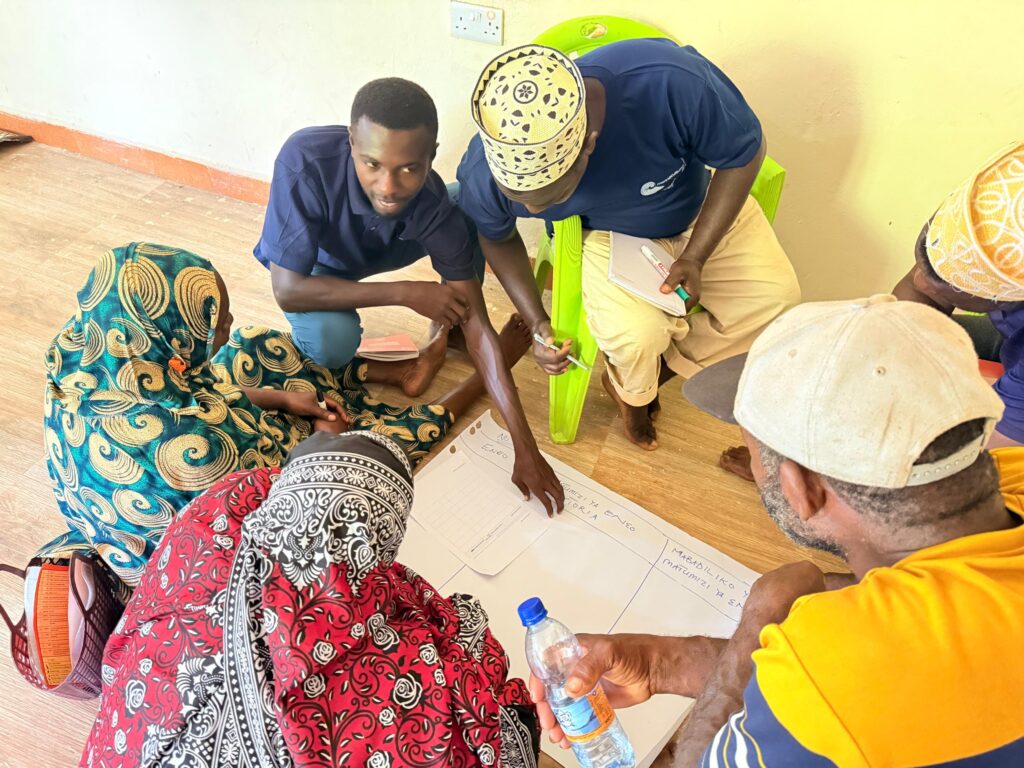
What does Co-Management mean?
Co-management means that fisheries are not managed by government authorities alone, but are managed together with the people who depend on and use these resources. Fishers, local communities, government authorities and NGOs such as marinecultures.org work together to make decisions about the use and management of marine resources.
This project is being implemented in partnership with Blue Ventures, who describe co-management as a collaborative approach between local communities and government. This approach enables local people, supported by marinecultures.org, to contribute their experience and knowledge, while government authorities provide the legal and institutional framework.
Co-management is not a new concept in Zanzibar. It has been part of Zanzibar’s fisheries legislation since 1991. In practice, however, there has been an ongoing process of finding effective ways to ensure that local communities can participate meaningfully and sustainably in the management of their marine resources.
What are we managing together?
The focus is on fish stocks, fisheries and the habitats they depend on, including coral reefs and other important coastal ecosystems.
Together, communities and relevant stakeholders can determine where, when and how fishing takes place. Possible measures include temporary fishery closures, regulations on fishing gear, or the protection of specific areas. One example is the community-led, temporary closure of fishing areas, particularly for octopus fishing.
From Data to Shared Decisions
Knowledge and data are an important part of co-management. Data on catches, fish stocks and the local fisheries situation are needed to develop appropriate management measures. At the same time, the experiences, knowledge and perspectives of local communities are an essential part of the process.
Our goal in the six villages is therefore not to impose ready-made solutions from the outside. We want to work together with the communities to understand what works, what needs to change and which management measures can be supported and maintained in the long term. Every village has its own challenges and potential.
For marinecultures.org, this marks an important step: moving from individual conservation activities towards long-term, community-based management of coastal resources.